THIRD CHAKRA
MANIPURA
The 3rd Chakra stays for “Motivation & Action”

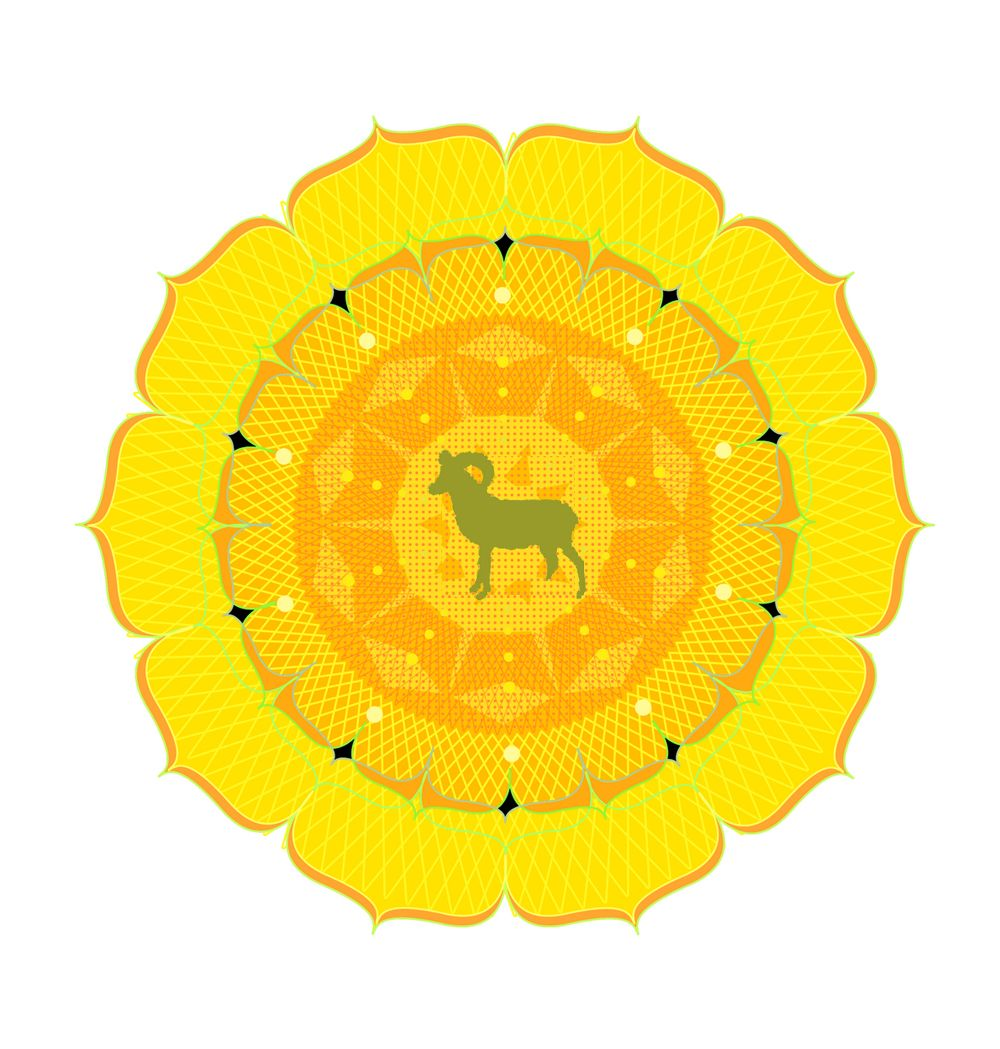
Color: Yellow
Element: Fire
Number of Petals: 10
Location: Between 9th, 10th, 11th, 12th thoracic vertebrae & 1th, 2nd lumbar vertebrae
Action organ: Rectum
Sense organ: Eyes
Bija (Seed) Mantra: RAM
Key Word: I thrive
Central Function:
Manipura is translated as 'Shining City' or 'Radiant City Center'. Manipura (Mani jewel that shines, diamond, gemma_Puri: city). This chakra is a flame that is kept alive through the challenges of our lives. This fiery power burns with purpose and strengthens our will in order to remain continually motivated. Like fire this energy has to be controlled and directed, otherwise it risks being burnt. Manipura chakra oversees the digestion and energy production of the body. It is the center of psychic intuition enabling a vague sense of knowing referred to sometimes as listening to the gut. It is linked to the coeliac plexus, also called solar plexus, the largest autonomic nerve network in the abdomen. The subdivisions of coeliac plexus supply to different viscera of abdomen including digestive system. Solar plexus and its function are to absorb and digest Prana from the sun. It is associated with the eyes because it is tied to the sense of sight. It is associated with the feet also because it is related to mobility. Manipura is considered to be related to the pancreas and adrenal glands; the adrenal cortex, in the endocrine system. This
way Manipura distributes Prana throughout the body as these glands produce key hormones involved in digestion, transforming food into energy for the body.
The Chakra of motivation, where we mobilize our energy. In this center of energy we put our desire and our intentions. This Chakra is a flame that is kept alive through the challenges of life. This fiery power burns with purpose and strengthens our will in order to remain continually motivated. Like fire this energy has to be directed otherwise the energy risk being burnt. It is the center of psychic intuition enabling a vague sense of knowing referred to sometimes as listening to the gut. In this center of energy we place our desire and our intentions.
Also called Nabhisthana Chakra,( Nabhi means navel) or Mani Padma (bejeweled Lotus)
A person with a balanced Manipura Chakra possesses accountability, reliability, honesty, prudence, luminosity, respect for traditions, industriousness, technical ability, heightened energy, and a spirit to speak up for yourself and for others.
Connected To:
This Chakra is connected to the digestive system which is linked to the gastric fire designating the digestive processes and energy production by the body. Its focal point is the pancreas, which produces the digestive enzymes. Manipura Chakra is connected to the solar plexus and the diaphragm a dome-shaped muscle tendon which divides the chest from the abdomen.
Signs of Imbalances:
1. Liver, Bile, and/or Pancreas problems
2. Digestive and metabolic problems
3. Ulcer
4. Stomach pains
5. Acid Reflux / Heartburn
6. Mental blocks
7. Excessive Control
8. Aggressiveness
9. Near or Far Sightedness
10. Fatigue
11. Impatience
12. Exaggerated Perfectionism
Suggestions how to balance Manipura:
Chakra Kriya, Mudra, Bandha, a Chakra related asana sequence, humming the Chakra's seed mantra, Chakra Shuddhi, essential oils.
1. Fasting
2. Reduce salts and sweets
3. Reducing coffee
4. Soften ego
5. Relax the exhalation
6. Increase awareness
7. Yoga and Pranayama practise
8. Bandha practise
9. Mudra practise
Asana
Ardha Navasana, Paripurna Navasana, Trikonasana, Parivrtta Trikonasana, Virabhadrasana, Utkatasana, Vasisthasana, Dhanurasana, Purvottasana, Setu Bandhasana, Chakrasana,
Ardha Matsyendrasana, and many more.
Pranayama (Breathing Technique)
Bastrika (Bhastrika Pranayama, means "bellows breath" in Sanskrit, derived from bhastra, which refers to the tool a blacksmith uses to fan and stoke a fire).
Agni Sara ( Agni" means fire, and "Sara" means essence or washing, also alled the "fire wash" or Vahnisara Dhauti).
Kapalabhati (Skull Shining Breath). In traditional Hatha Yoga, it is actually classified as a Shatkarma (a cleansing process) rather than a pure Pranayama. Its main goal is to detoxify the system, but as a byproduct it creates light in the brain, as its forceful upward oriented oxygen stream moves the mini crystals in the pineal gland, which rub against each other and create energy, thus light. Avoid intense Kapalabhati if acid reflux is acute.
Mudra
(Gesture, Attitude) Mudra practice redirects prana like light is reflected in a water drop drawing a rainbow and sound waves are reflected from a mountain wall to orchestrate an echo.
The Sanskrit word Mudra is translated as gesture and attitude. Mudra is also translated as seal, short cut, circuit by-pass. The Hatha Yoga Pradipika considers Mudra a yoganga, an indipendent branche of yoga. Mudras are physical, emotional, devotional and aesthetic gestures and shall be introduced to a student only after some proficiency in asana, pranayama and bandha techniques have been attained and major energy blockages are removed. Mudras provide the vehicles to access and influence the unconscious reflexes, automatic reflexes where we do not require the brain to create an action. (I.e when a doctor taps the tendon below your knee causing the leg to kick out).
Also do mudras break instinctive habit patterns originated in the brainstem, the part of the brain which connects the skull to the spinal cord. The brain stem controls functions basic to survival such as heart rate, breathing, digestion, sleep.
They are subtle physical movement which alter mood, attitude and perception, enabling withdrawl of the senses (not: sense of withdrawl) concentration and awarness.
Mudra assists the practioner to feel the flow of Prana (vital life force energy) within, establishing a direct connection to our physical- (annamaya kosha), mental- (manomaya kosha) and pranic body (pranamaya kosha) and its balance between the bodies . Nadis (energy channels) and Chakras (energy wheels) diffuse prana at all times. Each mudra establish a different link and has a different effect on the body, mind and prana. Through Mudra practices the dissipation of the vital life force is blocked, thus we do not waste energy into the outer world but redirect energy within the body inducing eventually a higher state of consciousness .
Life force is called by the Indians prana, by the Chinese qi or chi, the Japanese call it ki, mana called by the Hawaiians, pneuma by the ancient greece.
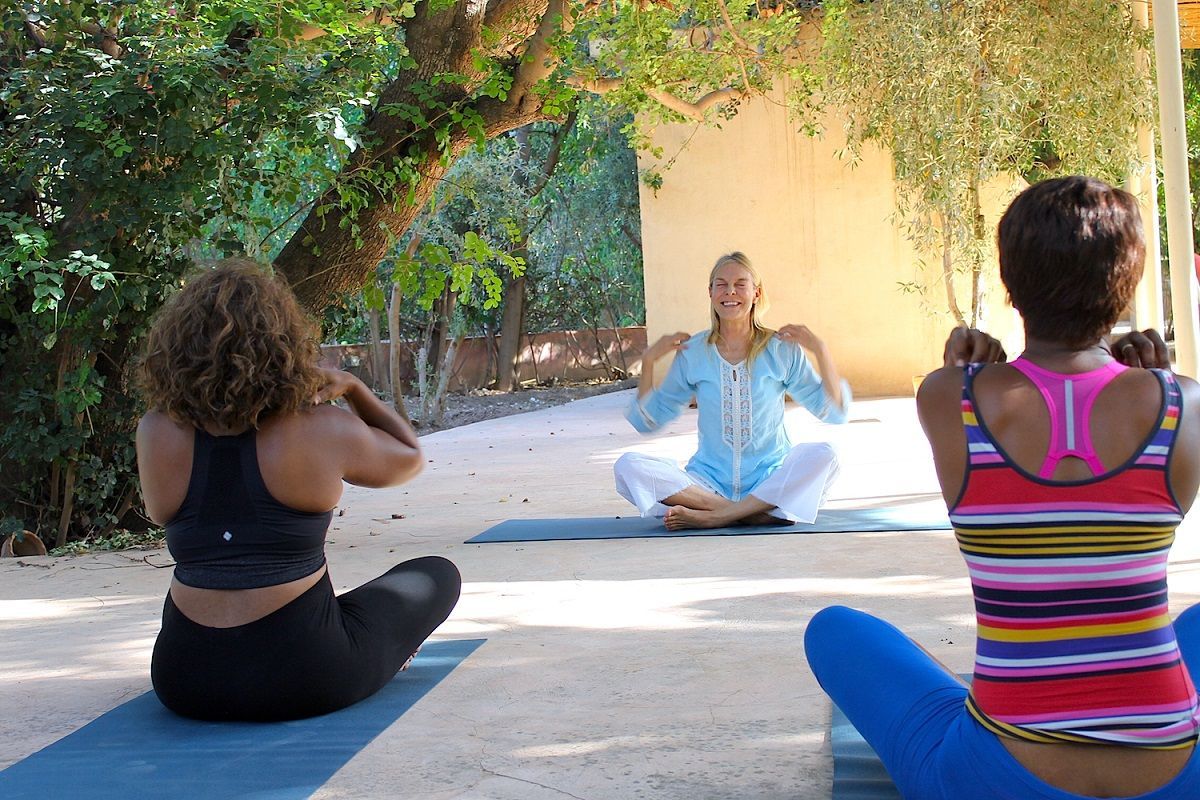
Nada Mudra, the gesture that resonates. Inhale deeply, observing the slight expansion of the abdomen and the straightening of the arms as they move the knees away from the chest to make room for the breath. As you exhale and your hands guide the knees back toward the chest, and perform "RRRaaammm", the bija mantra of the fire element. Repeat the exercise twice.
Vipareeta Karani Mudra (legs at a 60-70°).
Manipura Mudra, place your hands on lower abdomen, inhale slowly, then exhale deeply as you hinge your torso forward, and perform the bija mantra "rrraaaaaaammm".
Kriya Mudra
The Goddess Svaha, ignites the spark that fuels the inner fire, and spreads and substaines the heat throughout the entire body.
Stand upright with your legs spread slightly wider than shoulder-width apart. Keep your feet parallel, with your toes turned slightly inward. Place your hands over your navel—left hand underneath, right hand on top—with your fingertips pointing toward the ground; allow your elbows to rise naturally. Inhale slowly, then exhale deeply as you bend your knees and hinge your torso forward, resting it upon your elbows and perform the bija mantra "rrraaaaaaammm". Hold the position for as long as it feels comfortable, focusing your attention on the center of your abdomen. As you breathe, visualize yourself being infused with luminous energy; feel your internal warmth merging with the warmth of your hands. Ensure the heat remains steady. If the sensation becomes too intense—particularly for women going through menopause—ease out of the posture. Incase of menopause you can as well just place your hands on lower abdomen, inhale slowly, then exhale deeply as you hinge your torso forward, and perform the bija mantra "RRRaaamm" ( pronounced the plosive 'r', the lighter 'a', and the nasalized 'm'
Chakra Shuddhi (Chakra Shuddhi is focused on purifying the subtle energy centers and balancing the body's elements through breath, visualization, and seed mantras)
Focus on the point behind the navel and visualize with the eyes of your mind the form of Manipura: a central point within a circle, surrounded by ten petals or rays extending outward.
Inhale slowly, focusing on the central point; hold your breath for a second, then exhale ten times towards the petals, evenly distributing your breath to each petal.
Bandha (internal yogic body seal or pressure zone regulator designed to direct, contain, and regulate the flow of Prana, the vital life force energy, within the body)
Uddiyana Banda,
Nauli (an advanced traditional Hatha yoga cleansing technique (shatkarma) that involves isolating and churning of the abdominal muscles to massage internal organs)
Essential Oils
Bergamot, Rosemary, Everlasting (Heliochrysium), Black Pepper, Orange Blossom (Fleur d'Orange), Cardamom, Geranium, Ginger, Petit Grain (Citrus Aurantium), Rose, Sandalwood, Spikenard, Ylang Ylang, Juniper
Chakra research and 40+ years of studies by Ines Stephan
Reference source, Fonti di referenze: Aveda Chakras by Dr.Vinod and Kusum Upadhyay; Ayurvedic Physicians & Honorary Advisors to the Himalayan Institute Hospital Trust Ayurvedic Therapy Program; Gabriella Cella Marco Canzoni‘ Il libro dell’Aria e del Respiro’(Baldini, Castoldi, Dalai); Gabriella Cella Al-Chamali ‘Yoga’ (Sonzogno); Gabriella Cella Al-Chamali ‘Respirazione Distacco Concentrazione Meditazione’ (Sonzogno); Gabriella Cella Al-Chamali ‘Chakra’ (editore Fabbri); Swami Satyananda Saraswati ‘Asana Pranayama Mudra Bandha’ (Yoga Pubblication Trust); Maurizio Morelli ‘Il libro dei Chakra’ (distribuito da : Fiore d’Oriente).